Editorial review: August 1, 2026. This guide was checked against official destination, heritage and park resources. Entry rules, ticket systems and park access can change, so confirm the official links before paying for non-refundable travel.
South America rewards ambition, but it punishes a rushed itinerary. The continent is larger than many first-time visitors expect, mountain journeys are slower than they look on a map, and the most famous places do not share one climate.
The sensible first trip is not a race through six countries. It is a clear choice between culture, wildlife, mountains, cities and coast, followed by a route that leaves enough time to experience them. These six destinations are not a definitive ranking. They are six strong starting points that reveal very different versions of the continent.
The short answer: which South America destination suits you?
| Your priority | Best match | Time to allow |
|---|---|---|
| Iconic history and mountain scenery | Machu Picchu and the Sacred Valley | 5 to 7 days around Cusco |
| City, beach and dramatic viewpoints | Rio de Janeiro | 3 to 5 full days |
| A major natural spectacle | Iguazu Falls | 2 to 3 nights |
| Wildlife found nowhere else | Galapagos Islands | 5 to 8 days |
| Food, architecture and late-night culture | Buenos Aires | 4 to 6 days |
| Hiking and open landscapes | Torres del Paine | 4 to 7 days in the park region |
Before you choose: three planning realities
Distance matters more than the number of borders
A direct flight can make two countries easier than two remote regions in the same country. Compare the full journey from hotel to hotel, including airport transfers, altitude recovery, ferry or bus schedules and the possibility of weather delays.
There is no single best month
Patagonia, the tropical coast, the Andes and the Galapagos follow different seasonal patterns. Start with the experience you care about most, then choose dates. Trying to make every region perfect in one trip usually creates a weak route.
Entry rules depend on the passport
South America does not have a single tourist visa. Check the immigration or consular authority for every country on your route, including countries used only for connections that require you to pass border control.
1. Machu Picchu and the Sacred Valley, Peru
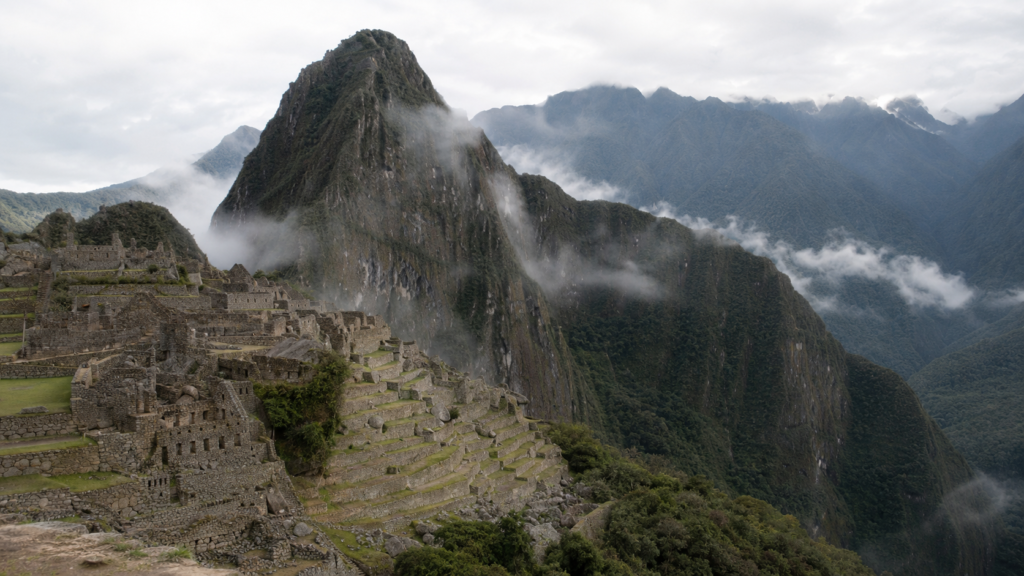
Machu Picchu is the headline, but the journey becomes richer when the Inca site is treated as part of a wider Andean landscape. Cusco, Pisac, Ollantaytambo and the Sacred Valley add markets, stonework, farming terraces and living communities that make the famous citadel easier to understand.
Do not land in Cusco and build the hardest day first. The city sits at high altitude, and people respond differently even when they are fit. A gentle first day, hydration and an itinerary with room to slow down are more useful than pretending altitude can be scheduled away.
Machu Picchu tickets are sold by route and time slot. The official site currently groups access into three circuits with several routes, and not every ticket produces the same view or walking experience. Buy through the official system, match the circuit to what you want to see and check the identity-document rules before arrival.
Best for: archaeology, mountain scenery and travellers willing to plan ahead. Continue with our first-time Peru guide.
2. Rio de Janeiro, Brazil
Rio is one of the rare cities where the geography is part of daily life. Forested hills meet dense neighbourhoods and long urban beaches; viewpoints are not separate attractions so much as ways of understanding how the city fits together.
Allow at least three full days. Use clear weather for Corcovado or Sugarloaf, dedicate another day to the historic centre and Santa Teresa, and leave time for the coast without treating Copacabana as the whole city. Travel between neighbourhoods with a plan, especially after dark, and use current local advice rather than broad assumptions about safety.
Best for: a first visit to Brazil, urban scenery, beaches and nightlife. Compare the city with other regions in our Brazil destinations guide.
3. Iguazu Falls, Brazil and Argentina
Iguazu is not one viewpoint. The Brazilian side is known for broad panoramas, while the Argentine side uses a larger network of walkways that brings visitors closer to different sections of the falls. Visiting both can be worthwhile, but it means crossing an international border.
Stay at least two nights and add a third if you want both sides without building the trip around flight arrival and departure times. Confirm that your passport and visa status allow entry into each country and re-entry to the country from which you depart.
Best for: a compact nature stop that can connect with Rio, Sao Paulo or Buenos Aires.
4. Galapagos Islands, Ecuador
The Galapagos experience is defined by controlled access, guides and distance. Wildlife may appear remarkably calm around visitors, but that does not make the islands an open-air attraction park. Following marked routes and guide instructions is part of protecting the place.
The biggest decision is whether to take a cruise or stay on inhabited islands. Cruises can reach more remote sites with fewer hotel transfers. A land-based trip can offer more independence and a lower entry price, but inter-island travel takes time and not every wildlife site is accessible on a day trip.
Budget beyond the flight: travellers may need a transit control card, park entry payment, authorised transport and confirmed accommodation. Check the Galapagos authorities before departure rather than relying on an old cost list.
Best for: wildlife, conservation and travellers prepared for a regulated destination. See our Ecuador planning guide.
5. Buenos Aires, Argentina
Buenos Aires works best when you stop collecting landmarks and begin comparing neighbourhoods. The formal avenues around Recoleta feel different from the old streets of San Telmo, the lakes and museums around Palermo, and the everyday residential city beyond the most photographed blocks.
Four days gives you room for a historic centre walk, a museum or architecture day, an evening performance and meals that are not squeezed between attractions. Tango is part of the city’s identity, but it is not the only way to experience local culture. Bookshops, football, cafes, contemporary art and neighbourhood food are equally revealing.
Best for: food, architecture, art and a city break with easy day-trip options. Use our Argentina travel guide to extend the route.
6. Torres del Paine, Chile
Torres del Paine is the strongest choice here for travellers who want the journey to revolve around walking. Granite towers, lakes, open steppe and rapidly changing weather make even short trails feel exposed and memorable.
You do not need to complete the multi-day W trek to justify the trip. Day walks can be combined from Puerto Natales or park accommodation, although long road transfers make location important. Reserve park entry, transport and accommodation early for the busiest period, and pack for wind and rain even when the forecast looks calm.
Best for: hiking and landscape-focused trips. Build the wider route with our Chile guide.
Three realistic first-trip routes
10 days: Peru with depth
- 2 nights in Lima
- 2 nights in the Sacred Valley
- 1 Machu Picchu day with a local overnight where practical
- 3 to 4 nights in Cusco, including recovery time
12 days: Brazil and Argentina
- 4 nights in Rio de Janeiro
- 2 or 3 nights at Iguazu Falls
- 4 nights in Buenos Aires
- 1 buffer night around the international flight
14 days: Ecuador and Galapagos
- 3 nights in Quito
- 2 nights in the Andes, cloud forest or Cotopaxi region
- 6 to 7 nights in the Galapagos
- 1 mainland buffer before the flight home
Common mistakes to avoid
- Adding a country for one photograph: airports and border procedures can consume the day you thought you were saving.
- Ignoring altitude: schedule gently in Cusco and other high Andean destinations.
- Booking protected sites through unofficial sellers: use the destination’s official ticket channel.
- Choosing the month after the flights: wildlife, trekking and water conditions may be the reason for the journey.
- Leaving no disruption buffer: weather and transport changes matter in remote regions.
Frequently asked questions
Which South American country is best for a first visit?
Peru is strong for history and a defined route; Brazil offers the widest contrast; Argentina combines an accessible capital with major landscapes; Ecuador is efficient for Andes and wildlife. The best choice depends on the experience you want, not a universal ranking.
Can I visit three South American countries in two weeks?
You can, but two well-connected countries usually produce a better trip. Three countries work only when the route has direct flights or a logical land border and each stop earns enough time.
How far ahead should I book?
Book protected sites, Galapagos arrangements and popular Patagonia accommodation first. Flexible city hotels can often wait, but the trip should be built around the least flexible component.