Editorial review: July 31, 2026. This guide was checked against Brazil’s official tourism, immigration and customs resources. Entry rules, park access and transport schedules can change, so use the official links before paying for non-refundable bookings.
Brazil is not a destination you finish. It is a country you edit down.
That distinction matters when you plan a first trip. Rio de Janeiro, the Amazon, Iguaçu Falls and Salvador look close on a map of South America; on the ground, they can mean several flights and a large share of your holiday spent in airports. A good Brazil itinerary chooses two or three regions that work together. A bad one collects famous names.
This guide compares 13 of the best places to visit in Brazil, explains what each one is actually good for, and shows how to combine them without turning the trip into a relay race.
The short answer: where should a first-time visitor go?
For a balanced first visit, start with Rio de Janeiro, add Foz do Iguaçu, then choose one contrasting region: Paraty for a slower coast, Salvador for Afro-Brazilian history and food, or the Pantanal for wildlife.
| Your priority | Best match | Planning note |
|---|---|---|
| Classic first trip | Rio + Iguaçu + Paraty | Strong variety with relatively simple connections |
| Wildlife | Pantanal | Better for visible wildlife than treating the Amazon as a checklist |
| Rainforest | Amazon via Manaus | Choose a responsible lodge and allow time for river travel |
| Beaches and diving | Fernando de Noronha | Remote, regulated and usually expensive |
| Food and culture | Salvador + Recife | A rewarding northeast pairing |
| Architecture and city life | São Paulo + Brasília | Best for museums, design, restaurants and modernism |
| Landscape that depends on season | Lençóis Maranhenses | Lagoon levels change; timing is central to the trip |
Before choosing: three things that shape a Brazil itinerary
Distance is the first budget
Brazil is vast. A domestic flight can save a day, but it also adds transfers, baggage rules and disruption risk. Check the whole door-to-door journey, not only the flight time shown in search results.
Seasons are regional
There is no single best month for the entire country. Lagoon levels in Lençóis Maranhenses, water and wildlife movement in the Pantanal, rain in the Amazon and beach conditions in the south follow different calendars. Decide what you most want to see, then choose the month.
Entry rules depend on your passport
Do not copy another traveller’s visa advice. Check Brazil’s official visa service for your nationality and the Federal Revenue traveller guide for customs and arrival information.
1. Rio de Janeiro: the strongest first stop
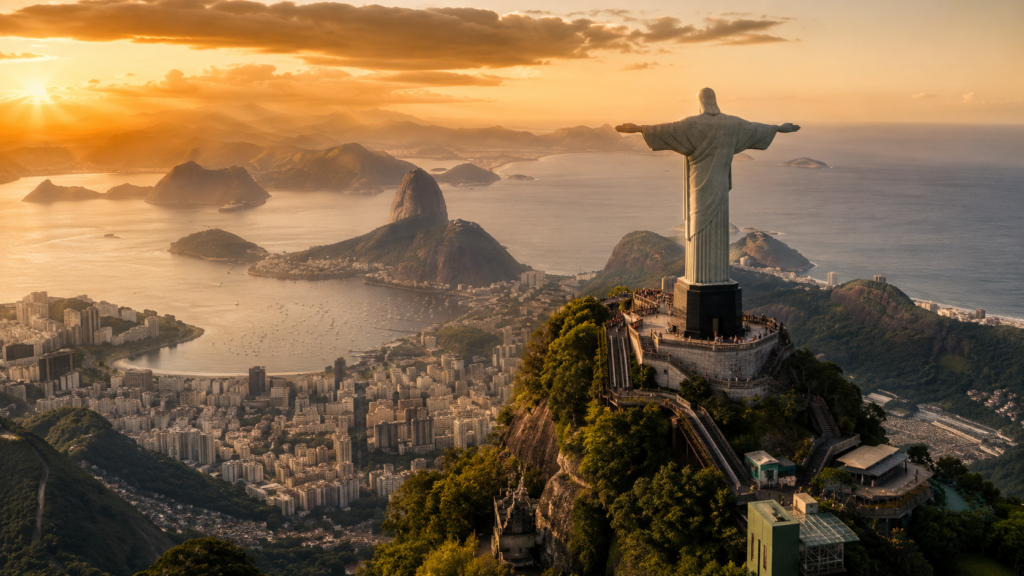
Rio earns its reputation, but the city is more convincing at street level than from a viewing platform. Corcovado and Sugarloaf give you the geography; the beach, neighbourhood restaurants, samba venues and the forested slopes explain how the city lives with it.
Give Rio at least three full days. Use one for the major viewpoints, one for the historic centre and Santa Teresa, and one for the coast and a neighbourhood you can explore without rushing. Build flexibility around weather: a clouded-in summit is not improved by a fixed schedule.
Best for: first-time visitors, urban scenery, beaches and a broad introduction to Brazil. Check the official Rio destination page.
2. Foz do Iguaçu: a natural spectacle worth the detour
You hear Iguaçu before the full view opens. The Brazilian side is valued for its wide panoramas; the Argentine side offers a different network of walks and close approaches. Visiting both sides means an international border crossing, so confirm that your documents allow you to enter and return.
Two nights is the practical minimum for an unhurried Brazilian-side visit. Add time if you plan to cross into Argentina or if your flights leave little recovery room.
Best for: dramatic landscapes and an easy contrast with a city itinerary. See Visit Brasil’s Foz do Iguaçu guide.
3. Paraty: colonial streets between forest and sea
Paraty works because its historic centre, Atlantic Forest and island-dotted coast sit close together. The stone streets discourage speed, which is part of the point. Stay overnight rather than treating the town as a hurried photo stop from Rio.
Boat trips vary widely in size and style. Ask where the boat stops, how long it spends at each beach, and whether the route changes with sea conditions. On land, footwear with grip is more useful than polished holiday shoes.
Best for: couples, slow travel, history and a coastal break after Rio. Paraty and Ilha Grande form a UNESCO mixed heritage site.
4. São Paulo: Brazil at full urban scale
São Paulo is not a single sightseeing circuit. It is a collection of neighbourhoods connected by a city large enough to punish poor planning. Group each day geographically: Avenida Paulista and its museums; the historic centre; Liberdade; or a food-focused route through neighbourhood markets and restaurants.
The reward is range: major art institutions, Japanese-Brazilian culture, serious coffee, music, football and one of the continent’s deepest restaurant scenes. The city makes most sense to travellers who enjoy cities rather than merely tolerate them between flights.
Best for: food, museums, nightlife and repeat visitors.
5. Salvador: Afro-Brazilian history that is still alive
Salvador’s importance is not confined to colourful façades in Pelourinho. It is present in religion, music, dance, food and the difficult history of slavery and resistance. A guided historical walk can provide context that a quick circuit misses.
Combine the upper city’s historic core with time around Barra and the coast. Keep valuables discreet, use deliberate transport after dark and ask your accommodation about the current situation block by block rather than relying on sweeping labels about the whole city.
Best for: history, music, food and cultural depth. Start with the official Salvador page.
6. Recife: bridges, frevo and a useful northeast base
Recife Antigo gives you a walkable introduction through bridges, waterfront streets, museums and the restored Rua do Bom Jesus. The city is also a gateway to Olinda, whose hills and colonial centre make a natural day trip.
Recife is especially compelling around Carnival, but festival travel requires early accommodation and realistic expectations about crowds and transport. Outside the festival period, its music, food and layered urban history remain the reason to stay.
Best for: culture, Carnival traditions and pairing with Olinda. See the official Recife guide.
7. Fernando de Noronha: beauty with limits
Fernando de Noronha is a protected Atlantic archipelago known for clear water, diving, marine life and steep coastal scenery. It is also remote and regulated. That means a trip should begin with access rules, environmental charges, transport and accommodation, not with a list of beaches.
The island suits travellers willing to pay more for a nature-focused stay and accept that conservation can limit where and how they visit. Rules change, so verify them before buying flights.
Best for: diving, snorkelling and a dedicated island trip. Use the official Noronha destination page.
8. Lençóis Maranhenses: dunes that hold seasonal lagoons
Lençóis Maranhenses looks like a white desert until the rainwater lagoons appear between the dunes. The landscape depends heavily on season and recent rainfall, so old photographs are not a reliable promise of what you will see on a specific week.
Barreirinhas is the common gateway; Atins offers a slower base with a different rhythm. Local transfers can involve road, boat and sand, so leave space between the park and a fixed flight.
Best for: unusual landscapes and travellers who can plan around season. The park joined the UNESCO World Heritage List in 2024.
9. The Amazon from Manaus: listen before you look
An Amazon trip is not a guaranteed parade of large animals. Its scale emerges through river travel, forest sounds, changing water levels, plants and the knowledge of local guides. Manaus is a major gateway, but the quality of the experience depends on what happens after you leave the city.
Compare lodges by transfer time, group size, guide qualifications, wildlife policy and community relationships. Avoid operators that stage animal handling for photographs. A quieter itinerary often reveals more than a packed one.
Best for: ecology, river landscapes and travellers comfortable with heat, insects and uncertainty. UNESCO describes the Central Amazon Conservation Complex.
10. The Pantanal: Brazil’s clearest wildlife choice
The Pantanal’s open wetlands often make wildlife easier to observe than in dense rainforest. Jaguars draw the headlines, but giant otters, capybaras, caimans, macaws and abundant birdlife make the ecosystem rewarding even without a dramatic sighting.
Choose the northern or southern Pantanal based on access, season and the lodge programme; they are not interchangeable add-ons. Ask how many hours are spent in vehicles or boats and how sightings are managed.
Best for: wildlife photography and natural history. Read UNESCO’s profile of the Pantanal Conservation Area.
11. Brasília: modernism at city scale
Brasília was planned before it was inhabited at scale, and that origin still shapes the visitor experience. Oscar Niemeyer’s buildings make more sense in relation to the Monumental Axis, open sky and large spaces than as isolated façades.
Distances are substantial. A guided architectural tour or a carefully planned transport day is usually more effective than trying to walk between everything. Check access hours: government buildings and interiors may follow restricted schedules.
Best for: architecture, design and political history. See Visit Brasil’s Brasília overview.
12. Belo Horizonte: a city understood through food
Belo Horizonte, usually called BH, is a practical base for the food and culture of Minas Gerais. The Central Market, neighbourhood bars and regional cooking matter as much as the formal sightseeing list.
The Pampulha Modern Ensemble adds an architectural reason to stay, while Ouro Preto and other historic towns can extend the trip into a wider Minas Gerais route. Do not compress that route into a rushed return journey if you have the time to sleep outside BH.
Best for: regional food, modern architecture and access to Minas Gerais.
13. Curitiba: urban planning and a gentler southern pace
Curitiba is known for parks, public transport and an urban character different from Rio or Salvador. The official Linha Turismo loop links many major sights and can help a short-stay visitor understand the city’s spread before choosing where to spend longer.
The weather can shift quickly, and the city is cooler than Brazil’s tropical stereotype suggests. Pack a layer even when the rest of your route looks warm.
Best for: parks, design and a quieter city break. Check the official Linha Turismo information.
Three realistic Brazil routes
7 days: Rio and one extension
- Days 1-4: Rio de Janeiro
- Days 5-7: Paraty or Foz do Iguaçu
Choose Paraty for a road-based coast route; choose Iguaçu for a high-impact flight extension.
12 days: the balanced first trip
- Days 1-4: Rio
- Days 5-6: Foz do Iguaçu
- Days 7-10: Salvador
- Days 11-12: transfer buffer and departure
This route combines landscape, city life and Afro-Brazilian culture without pretending you can see the whole country.
14 days: Rio, coast and wildlife
- Days 1-4: Rio
- Days 5-7: Paraty
- Days 8-13: Pantanal including transfers
- Day 14: departure buffer
Do not place a remote wildlife lodge directly before an unprotected international departure.
Common planning mistakes
- Booking by map distance: transport networks, not visual proximity, determine the real journey.
- Chasing every headline: Rio, Amazon, Pantanal, Noronha and Iguaçu in one short trip is an airport itinerary.
- Ignoring the season: water, wildlife and access can define the experience.
- Using one safety rule for an entire city: ask for current, neighbourhood-level advice.
- Assuming Spanish is enough: Portuguese is Brazil’s language; a few useful phrases change everyday interactions.
- Leaving no disruption buffer: weather and long domestic journeys can affect connections.
Frequently asked questions
How many days do I need for Brazil?
Ten to fourteen days is a useful first-trip range for two or three regions. With seven days, choose Rio plus one coherent extension rather than crossing the country.
What is the best place to visit in Brazil for a first trip?
Rio de Janeiro is the strongest introduction for most first-time visitors because it combines major landmarks, beaches, forest and everyday city life. Add Iguaçu, Paraty or Salvador according to your interests.
Is the Amazon or Pantanal better for wildlife?
The Pantanal’s more open landscape often makes large wildlife easier to observe. Choose the Amazon for the rainforest and river ecosystem as a whole, not for a guaranteed animal checklist.
Do I need a visa for Brazil?
It depends on nationality, travel document and purpose. Verify the current rule through Brazil’s official visa service before buying a non-refundable ticket.
Official sources checked
- Visit Brasil – national tourism platform
- Brazil government visa service
- Brazil Federal Revenue – entering Brazil
- UNESCO World Heritage sites in Brazil