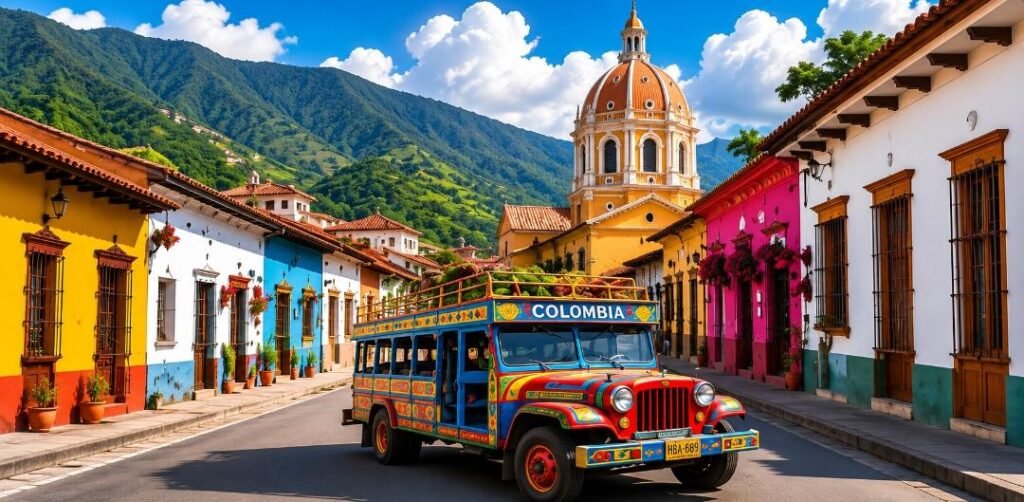
Editorial review: July 31, 2026. We checked the practical sections against official Colombian immigration and tourism information. Confirm entry rules, Check-Mig access and local conditions again before departure.
A strong first trip to Colombia is not a race through every famous place. The country combines high-altitude cities, Caribbean heat, coffee-growing mountains and long overland distances. Most travelers get a better experience by choosing three regions and using domestic flights for the longest jumps.
Prefer Arabic? Read the Colombia travel guide in Arabic.
Colombia for first-time visitors: the short answer
- Best trip length: 10 to 14 days for three distinct bases.
- Classic first route: Bogotá, Medellín and Cartagena.
- Best addition for nature: the Coffee Region or the Caribbean coast around Santa Marta.
- Essential pre-travel check: nationality-based entry rules and Colombia’s official Check-Mig process.
Entry rules and Check-Mig
Colombian visa requirements depend on your passport, reason for travel and intended stay. Use the Colombian foreign ministry or an official consulate source for the visa decision. An airline blog or an old forum answer is not enough because eligibility can change.
Colombian immigration provides Check-Mig, an online pre-registration tool for travelers entering or leaving the country. Use only the official Migración Colombia website or application. Be cautious with private sites that resemble a government form and charge unnecessary service fees. Complete the current official process within the stated time window for your journey and keep the confirmation accessible.
A completed form does not replace a passport, visa when required, ticket checks or the immigration officer’s decision. Carry your first accommodation details and evidence of onward travel in a form you can access without mobile data.
Where to go on a first Colombia trip
Bogotá: history, museums and altitude
Bogotá is often the international gateway and deserves at least two full days. La Candelaria, the Gold Museum and the Botero Museum provide an effective introduction to Colombian history and art. The city sits high in the Andes, so a first day with lighter activity is sensible after a long flight.
Weather can change quickly. Pack a light waterproof layer even when the morning looks clear. Choose accommodation based on the places you intend to visit rather than the city name alone; crossing Bogotá in traffic can take longer than expected.
Medellín: neighborhoods, innovation and day trips
Medellín offers mild temperatures, extensive public transport and a dramatic valley setting. A thoughtful visit goes beyond a single transformation narrative. Use qualified local guides where history and community context matter, follow current neighborhood advice and treat residential areas as homes rather than sets.
Guatapé is a popular day trip for its reservoir landscape and colorful streets. It is a long day once road traffic and stops are included. Staying overnight can make sense if the town is a priority rather than a checklist item.
Cartagena: Caribbean history and heat
Cartagena’s walled city is visually striking and easy to explore on foot, but heat and humidity shape the day. Start early, rest around midday and return outside later. Getsemaní adds street life and public art, while beach expectations should be researched carefully: the urban waterfront is not the same experience as island or coastal beaches.
Prices in the main visitor zone can be higher than elsewhere in Colombia. Confirm prices before accepting food, tours, photos or beach services. A clear question is easier than resolving a dispute later.
The Coffee Region: landscapes and smaller cities
The Coffee Cultural Landscape around towns and cities such as Salento, Armenia, Pereira and Manizales rewards slower travel. Select a base according to transport and activities rather than chasing the most photographed street. A responsible coffee visit should explain cultivation, harvesting, processing and the economics of the crop, not only provide a tasting backdrop.
Santa Marta, Tayrona and the Caribbean coast
Santa Marta is a gateway rather than the sole attraction for many travelers. Tayrona National Natural Park combines forest and coast, but access, closures, indigenous community considerations and trail conditions require current checks. Do not build a fixed itinerary from an old opening calendar. Heat, humidity and walking surfaces also make the visit more demanding than the beach images suggest.
Cali and the southwest
Cali is an excellent choice for salsa culture and a less standardized city break. It is not essential on a short first itinerary unless dance or the southwest is a central interest. Go with a plan for neighborhoods and evening transport.
Realistic Colombia itineraries
7 days: choose two regions
Combine Bogotá and Medellín, or Medellín and Cartagena. A third major city creates too much airport and transfer time for one week. If an international flight connects through Bogotá, count the actual usable hours before adding it as a sightseeing base.
10 days: the classic first route
Spend roughly three nights in Bogotá, three in Medellín and three in Cartagena, with the remaining time absorbing flight schedules. This route gives three very different environments and simple domestic air connections.
14 days: add nature or travel more slowly
Add the Coffee Region or the Santa Marta area to the classic route. Alternatively, keep the same three cities and include day trips and rest days. The second option often feels richer because Colombia’s traffic, altitude and climate changes add hidden effort.
Flights, buses and local transport
Domestic flights are usually the practical link between Bogotá, Medellín and the Caribbean. Compare the final fare after baggage, seat and airport-transfer costs. Colombia has several airports serving the same broad destinations, so check the airport code before paying.
Intercity buses are useful on regional routes and for travelers with more time. Mountain roads can make journey times much longer than the map suggests. Avoid planning a long bus arrival immediately before an international flight or a nonrefundable tour.
In cities, use official public transport and established taxi or ride-booking arrangements appropriate to the location. Do not assume an app has the same legal or operational status everywhere. Your accommodation can explain the current local options.
Budgeting without misleading daily averages
Colombia can be good value, but one universal daily figure hides the choices that matter. Build the budget from accommodation, intercity transport, meals, admissions, guided experiences and a contingency amount. Cartagena’s historic centre and remote nature stays can cost much more than everyday expenses in other cities.
Pay in Colombian pesos and check the amount on the terminal before approving it. Carry more than one payment method, keep a small reserve separate and use ATMs inside secure premises when possible. Dynamic currency conversion can make a card transaction look familiar while applying an unfavorable rate.
Safety: useful habits instead of dramatic labels
Conditions vary by city, neighborhood, hour and current events. National-level labels are therefore less useful than a daily routine. Ask your accommodation which blocks and transport methods make sense now. Carry only what you need, keep phones discreet near roads, and avoid leaving drinks or belongings unattended.
Do not accept unsolicited tours or invitations that require handing over identification or moving to an unknown location. If meeting someone, choose a public place and keep control of your transport. For hiking and remote areas, use registered operators, check weather and access conditions, and tell someone the plan.
Official travel advisories from your own government can provide regional warnings, while Colombian authorities and park operators provide local operational changes. Read both; they answer different questions.
Climate, altitude and what to pack
Colombia’s seasons are shaped more by altitude and rainfall than by a simple north-south calendar. Bogotá can feel cool, Medellín mild and Cartagena intensely hot during the same week. Pack layers, sun protection and rain coverage rather than one outfit for the whole country.
Altitude affects travelers differently. Bogotá is high enough that some people notice breathlessness or fatigue. Hydrate, limit alcohol on arrival and make the first day flexible. Seek medical advice for severe or persistent symptoms.
Connectivity and practical details
An eSIM or local SIM can simplify navigation and bookings, but keep offline copies of accommodation addresses, tickets and the Check-Mig confirmation. WhatsApp is widely used by tourism businesses, yet important changes should still be confirmed through the operator’s official channel.
Spanish improves the trip considerably outside highly visited areas. Learn basic transport, price and emergency phrases. Translation apps help, but a short polite exchange often solves practical problems faster.
Common planning mistakes
- Adding too many regions because domestic flights look short.
- Ignoring Bogotá’s altitude or Cartagena’s midday heat.
- Using an unofficial paid website for Check-Mig.
- Assuming every part of a city has the same safety conditions.
- Booking a remote park visit without checking current access or seasonal closures.
- Choosing hotels by price without checking the exact neighborhood and transport needs.
Frequently asked questions
How many days do I need for Colombia?
Ten days works for Bogotá, Medellín and Cartagena. Fourteen days allows a nature region or a more comfortable pace. In seven days, choose only two main bases.
Do I need a visa for Colombia?
It depends on your nationality and travel purpose. Check Colombia’s official consular information before booking, and distinguish visa eligibility from the separate Check-Mig pre-registration process.
Is Check-Mig mandatory?
Migración Colombia operates Check-Mig for traveler pre-registration. Requirements and timing can change, so follow the official portal for the exact process applying to your arrival and departure.
What is the best first city?
Bogotá is best for museums and national context, Medellín for an accessible multi-day city base, and Cartagena for Caribbean history. The right starting point usually depends on your international flight and the next region.
Can I visit Colombia without speaking Spanish?
Yes in the main visitor circuit, but basic Spanish makes transport, food, prices and unexpected changes much easier. Do not rely on continuous mobile coverage in remote areas.