Read the Arabic version of this Nicaragua guide
Last reviewed: August 2, 2026. Nicaragua tempts first-time visitors to draw a straight line through every famous place: Leon, Granada, Ometepe, a Pacific beach and perhaps the Corn Islands. The map makes that look easy. Transport days, boat schedules and current entry procedures make a selective route much better.
This Nicaragua travel guide builds a two-week journey around the Pacific side of the country. It leaves the Caribbean for another trip and gives each stop enough time to feel like a place rather than a transfer point.
What to verify before travel
Foreign visitors should check passport and visa rules for their own nationality with Nicaraguan authorities or the responsible consulate. Nicaraguan legislation states that travelers using an ordinary passport should have more than six months’ validity; read the official migration text and confirm how it applies to your document.
Nicaragua’s tourism information says non-national travelers should complete the online immigration form and recommends doing so seven days before entry. Follow the current link and instructions on the official tourism FAQ. Visa classifications have changed for some nationalities, so a friend’s experience from last year is not proof of your own eligibility.
Carry onward travel details, the address of your first stay and accessible copies of reservations. If entering overland, ask whether your transport company requires information in advance.
A realistic 14-day Nicaragua route
Days 1-3: Leon
Leon is a good opening because the historic core is walkable and the city’s political, artistic and religious history gives context to the rest of the trip. Use the first day for a slow circuit around the cathedral and central streets. Keep the second for museums and churches, checking opening times locally.
On day three, choose one excursion. Volcano boarding is widely marketed, but it involves heat, exposed terrain and speed; use an established operator, read the safety briefing and make a decision based on your own fitness. Travelers who prefer a gentler day can visit nearby communities or the Pacific coast.
Days 4-6: Granada and Las Isletas
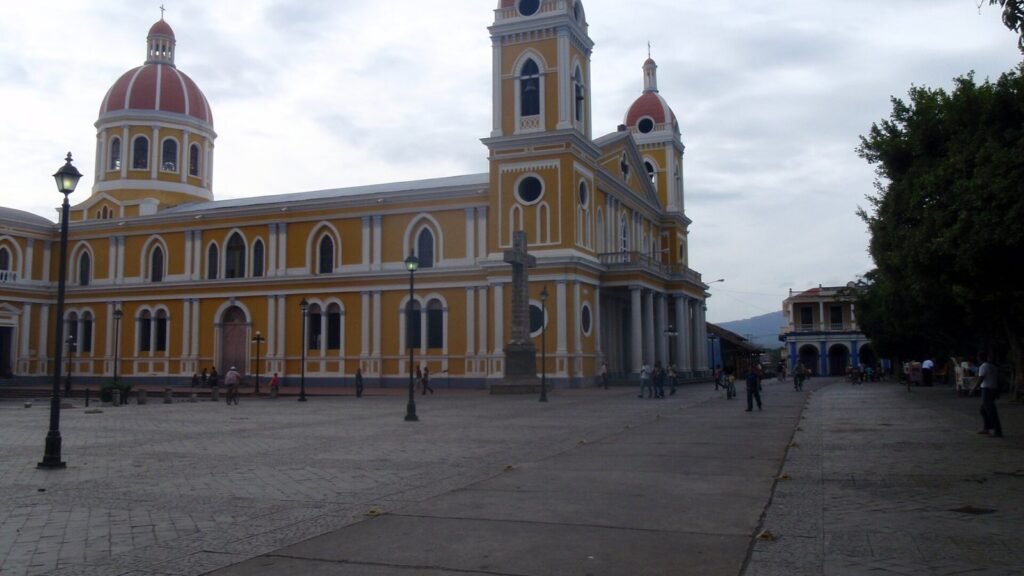
Travel to Granada in daylight and avoid turning the transfer into a race. Granada’s cathedral, colored facades and lakefront are easy to explore on foot, but the city is more than its most photographed street. Spend one morning around the market and ordinary neighborhoods with current local guidance.
Use another half day for Las Isletas. Ask the boat operator how long the trip lasts, whether wildlife feeding is avoided and what happens in poor weather. The best excursions observe the lake rather than staging animal encounters.
Days 7-10: Ometepe
Ometepe deserves at least three nights because ferry arrival, island transport and weather consume time. Choose your base before boarding. Moyogalpa has the easiest connections; Balgue and other rural areas feel quieter but increase transfer time.
Do not plan a major volcano hike for the morning after arrival. Conditions can be muddy, hot or clouded, and a guide may be required or strongly advisable depending on the route. A balanced stay pairs one demanding activity with springs, a farm visit, kayaking or a slow village day.
Keep the final island night free of a critical international connection. Ferry changes and road delays are ordinary planning risks, not personal disasters, when your schedule has a buffer.
Days 11-13: San Juan del Sur or a quieter Pacific beach
San Juan del Sur has the broadest choice of beds, restaurants and onward transport. It is also the wrong beach base for anyone expecting silence on busy weekends. If surfing or nightlife is not your priority, compare smaller nearby beaches and ask exactly how you will reach them without a car.
Use two full days for the coast. A lesson, boat trip or wildlife outing should leave room for heat and changing conditions. Avoid an itinerary that treats sunset as a deadline after a long road journey.
Day 14: Departure buffer
Return toward your departure airport or border with enough margin for traffic and formalities. If your flight leaves early, sleep near the gateway on the previous night. The most expensive hotel of the trip is the one you book after missing a flight.
Why the Corn Islands are not in this itinerary
The Corn Islands are a compelling destination, but adding them to a two-week Pacific route introduces flights and weather-sensitive connections. Give them a dedicated section of at least four nights, ideally by removing the beach stop and one colonial-city night. Treating a remote island as a quick add-on creates the opposite of island time.
How to move around
Public buses are inexpensive and useful for confident travelers with light luggage and flexible timing. Tourist shuttles reduce uncertainty between popular stops. Private transfers make sense for a small group, an early departure or a route that would otherwise need several changes.
On Ometepe, ask about road conditions between your port and accommodation before choosing a taxi, scooter or rental vehicle. A place that looks close on a map can take much longer on secondary roads. Never learn to ride a motorcycle because it appears to be the easiest holiday transport.
Current safety and practical judgment
Official travel advice differs by country and can change quickly. For example, the United States currently publishes a Level 3 advisory for Nicaragua; read the full Nicaragua travel advisory and then consult the advice issued by your own government. Political activity, photography near sensitive sites and public demonstrations can carry consequences that a casual visitor may not anticipate.
Use registered accommodation, take local advice about neighborhoods, keep valuables discreet and avoid isolated walking after dark. Save the address of your lodging offline. On beaches, ask about currents before entering the water; an empty beach is not evidence of safe swimming.
Dry season, green season and volcano plans
The drier months generally make overland movement and volcano activities easier, while the greener period brings lush landscapes and more rain-related uncertainty. Regional weather varies. A forecast for Managua is not a reliable forecast for a volcano slope or island crossing.
Build the trip around two or three experiences you care about, then let guides move those experiences to the best local day. A fixed spreadsheet cannot see cloud on a summit.
Combining Nicaragua with nearby countries
Overland travel within the CA-4 region does not automatically grant a fresh stay every time you cross a border. Confirm the shared-period rules for your nationality and keep track of the entry stamp or authorization you receive. For a neighboring route, compare our El Salvador guide and Panama travel guide.
Frequently asked questions
How long do I need in Nicaragua?
Ten days can cover Leon, Granada and Ometepe. Two weeks adds a Pacific beach without forcing a major transfer every other day.
Should I choose Leon or Granada?
They complement each other. Leon feels more intense and historically layered; Granada is an easier base for lake excursions. With less than a week, choose according to your onward route.
Do travelers need an online form?
Official tourism guidance recommends that non-national travelers complete the immigration form seven days before entry. Check the current official page because procedures can change.
Can I add the Corn Islands?
Yes, but allocate at least four nights and remove another region. Do not place an island-to-international-flight connection on the same unprotected travel day.
Official planning links
- Nicaragua tourism: entry form guidance
- Nicaragua Ministry of the Interior: consular procedures
- Official Nicaragua tourism portal
Featured image: Granada Cathedral by Daniel Aufgang via Wikimedia Commons, CC BY 3.0.