Read the Arabic version of this Cuba guide
Last reviewed: August 2, 2026. A good Cuba itinerary is not built by drawing a neat line through Havana, Vinales, Trinidad and the beach. It is built by accepting that transport, electricity, fuel and card access can change the day’s possibilities. In 2026, that operational planning belongs at the center of the guide, not in a footnote.
This first-trip route keeps the distances reasonable, explains the official eVisa and D’Viajeros steps, and leaves enough margin to enjoy Cuba when the original plan moves.
Cuba entry checklist for 2026
Most travelers who require a tourist visa can use Cuba’s official eVisa portal. The portal says applicants need a valid passport and email address, and that processing may take up to 72 business hours. Apply through an official Cuban channel or consulate rather than a lookalike site, and make sure the passport details are exact.
Cuba’s tourism authorities list the core formalities as a valid passport, the appropriate visa or eVisa, medical insurance, return or onward travel and the D’Viajeros declaration. Complete the official D’Viajeros form within the allowed window and keep its QR code available offline. Check the full regulations and formalities page shortly before departure.
Do not treat entry as a single eVisa purchase. Visa status, insurance, D’Viajeros and airline document checks are separate parts of the same journey.
The practical reality: power, fuel and supplies
Cuba has experienced serious electricity and fuel disruption. Conditions can vary by province and week. Read a current government advisory, such as Australia’s Cuba travel advice, and ask your accommodation direct questions: Is there backup power? How is water stored? Can the next transfer still operate? What payment is accepted today?
Carry necessary prescription medicine in original packaging, plus a reasonable personal supply of toiletries and basics that would be difficult to replace. This is not an invitation to overpack. It is recognition that the nearest shop may not stock the item you expect.
A flexible 10-day Cuba route
Days 1-3: Havana
Give Havana three nights. On the first day, keep the plan close to your accommodation and learn the current cash, transport and power situation. On the second, explore Habana Vieja with time for architecture, plazas and small museums. Use the third for Centro Habana, the Malecon and a neighborhood or cultural interest that matters to you.
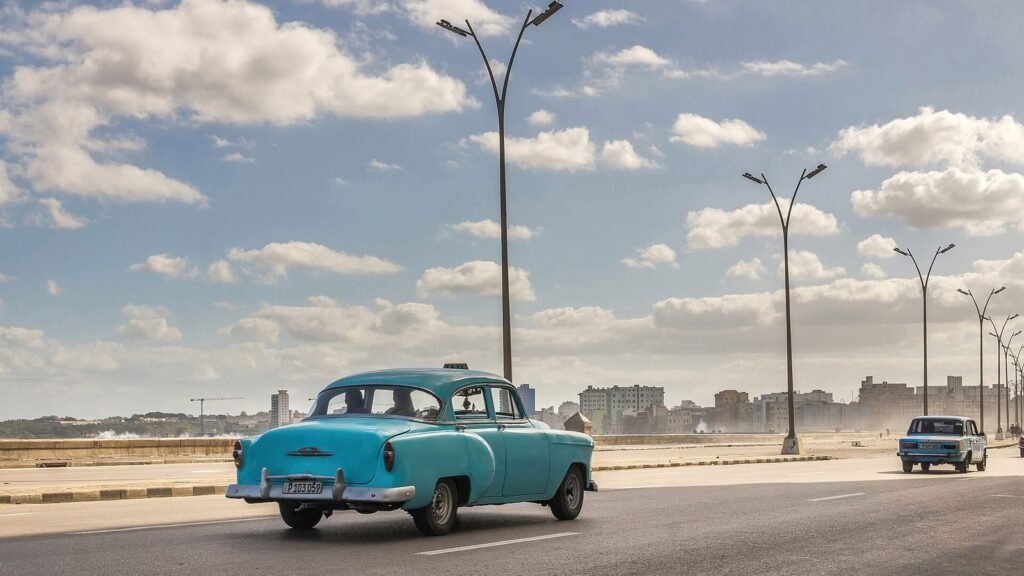
A classic-car ride can be enjoyable, but agree the route, duration, currency and total price before departure. Choose a vehicle because it is roadworthy and the driver communicates clearly, not only because the paint photographs well.
Days 4-5: Vinales
Vinales offers a rural contrast without crossing the island. Confirm transport a day before leaving Havana. A valley walk, farm visit or guided horse ride should be discussed in practical terms: duration, shade, animal welfare, weather and what is genuinely included.
Two nights allow a full day without making the return journey immediately after an excursion. If transport is disrupted, Vinales can become a day trip or be removed; it should not cause the entire trip to collapse.
Days 6-8: Trinidad
Trinidad is a longer transfer, so three nights justify the effort. Spend one day in the historic center and another on either the coast or the nearby valleys. Avoid stacking an early intercity bus, check-in, long excursion and nightlife into the same day.
Ask about evening electricity and water arrangements before booking, particularly if you need air-conditioning or must charge medical equipment. A beautifully reviewed room can still be a poor fit for your actual needs.
Day 9: Return toward Havana
Use Viazul or a prearranged transfer, but reconfirm. Cuba’s tourism portal links to current transport information, including Viazul. Schedules and availability are operational facts, so check the operator rather than copying a timetable from a blog.
Day 10: Departure
Keep the last night near the departure city. Recheck the airport terminal, transfer time and airline status. Do not plan a same-day cross-island journey before an international flight.
Money and cards: build a backup plan
Cuba’s payment environment is unusual and changes. Official tourism guidance notes that cards issued by United States institutions are not accepted. Other foreign cards may work in some formal businesses or ATMs, but no traveler should depend on one card or one machine. Read the current official Cuba tourism FAQ and ask your bank whether its card can be used.
Bring an appropriate mix of payment options, keep cash secure, and agree prices and currency before accepting a service. Avoid quoting or relying on a street exchange rate from social media; it may be unsafe, unlawful or obsolete by the time you arrive.
Connectivity without assuming constant internet
Download the eVisa confirmation, D’Viajeros QR code, insurance certificate, reservations and maps before flying. Save the phone number and address of each stay in a plain note. A power bank and a paper copy of the first accommodation can solve problems that a second travel app cannot.
If you need reliable internet for work, Cuba is not a destination where an ordinary leisure booking should be treated as a connectivity guarantee. Ask about the exact setup and have a plan for missed calls or deadlines.
Casa particular or hotel?
A licensed casa particular can provide direct local contact and a smaller-scale stay. A hotel may offer more formal services and, in some cases, stronger backup systems. Neither category is automatically superior. Recent reviews that mention water, power, breakfast and host communication are more useful than a generic star score.
Travelers subject to country-specific restrictions, including some United States rules, should verify which businesses and travel purposes are permitted under their own law. A Cuba entry permission does not answer every home-country compliance question.
A compact, useful packing list
- Printed and offline copies of entry documents and insurance.
- Prescription medicine and a small personal first-aid kit.
- Sun protection, insect repellent and a refillable bottle.
- A charged power bank and the correct plug adapter.
- More than one legal payment method, stored separately.
- A flexible attitude toward meals, transport and opening hours.
Frequently asked questions
Do I need an eVisa and D’Viajeros form?
They serve different purposes. Travelers who require a visa need the appropriate visa or eVisa, while D’Viajeros is the advance traveler declaration. Verify the requirements for your passport on official channels.
Is 10 days enough for Cuba?
Ten days are enough for Havana, Vinales and Trinidad with a return buffer. They are not enough for a relaxed trip across the entire island.
Can I rely on my credit card?
No. Card acceptance is limited, and United States-issued cards are not accepted according to official tourism guidance. Confirm with your bank and carry a secure backup.
Should I book every transfer in advance?
Book the essential long transfers, but reconfirm locally. Leave enough flexibility to replace or remove a stop if fuel or service conditions change.
Official planning links
Featured image: Havana’s Malecon by Ezarate via Wikimedia Commons, CC BY-SA 4.0.