Last reviewed: August 2, 2026. The most common Costa Rica planning mistake begins with enthusiasm: Arenal, Monteverde, Manuel Antonio, Tortuguero, Guanacaste and the Osa Peninsula all look essential. On a nine-day trip, they are not six experiences. They are six hotel changes connected by slow roads, boats and check-in times.
A better first trip chooses two regions that deliver different landscapes. This guide helps you choose the pair, then turns it into an itinerary with enough unscheduled time for weather and wildlife.
Costa Rica entry requirements
Costa Rica’s official tourism authority says visitors should have a valid passport, any visa required for their nationality, proof of economic means and a return or onward ticket. Its current guidance uses a minimum of US$100 for each month or partial month of stay, while the permitted stay is determined by immigration. Read the complete official Costa Rica entry requirements before travel.
Do not assume that visa-free entry guarantees a particular number of days. Check the stamp or electronic record you receive and ask an officer immediately if anything is unclear. Your passport category and nationality control the visa question, not the country where your flight originates.
Choose your two-region combination
Arenal and the Central Pacific: the balanced first trip
This pair works for travelers who want rainforest activities, hot springs and a Pacific finish. La Fortuna has a large tour network; Manuel Antonio and nearby Central Pacific towns add coast and national-park access. The trade-off is popularity. Reserve timed or capacity-limited experiences through official channels and do not expect empty trails at peak times.
Arenal and Guanacaste: the easiest family combination
Choose this pair when comfortable resorts, beach time and a relatively straightforward airport plan matter more than seeing the wildest region. Beach towns differ: some are built around nightlife and surf, others around a single resort. Check the exact location, not only the province name.
Monteverde and the Central Pacific: cooler forest plus coast
Monteverde gives the trip cloud forest, night walks and a cooler climate. Roads can be slow, so it pairs better with one coast base than with several inland stops. Travelers sensitive to motion should ask about road conditions and transfer type before booking.
Osa Peninsula: choose depth instead of a second region
The Osa is for travelers whose priority is biodiversity and who accept more complicated access, guided activities and higher logistical costs. On a short trip, the Osa can be the itinerary rather than one item inside it. Four nights there plus gateway nights is more honest than pretending it fits between Arenal and Guanacaste.
The official tourism site divides the country into distinct Costa Rica travel regions. Use those regional pages to compare access and character before choosing hotels.
A 9-day Arenal and Central Pacific itinerary
Day 1: Arrival and airport-area night if needed
If your flight lands late, sleep near the arrival airport. A night drive to La Fortuna adds fatigue at exactly the moment you are learning a new country. An early arrival can continue by prearranged shuttle, private transfer or rental car.
Days 2-4: La Fortuna and Arenal
Plan one main activity each day. A forest or volcano-area walk, a waterfall visit and a hot-springs session already make a full stay. Add rafting, canyoning or a hanging-bridge experience only after comparing physical demands and transport time.
Wildlife sightings are never guaranteed. A guide who finds fewer animals but respects distance and habitat is doing better work than one who corners an animal for a phone camera.
Day 5: Transfer to the Central Pacific
Treat the road as the day’s structure. Stop only where parking and timing are clear. If using a shared shuttle, ask whether it delivers to the hotel or a central point. If driving, download the route and avoid selecting an unpaved shortcut because a navigation app saves a few theoretical minutes.
Days 6-8: One Pacific base
Stay in Manuel Antonio or a nearby town if the national park is central to the plan. Reserve through the official system and check opening days; do not buy from a person impersonating an official at the roadside. Use the remaining days for a beach, mangrove trip, surf lesson or a quiet hotel day.
Never leave passports, electronics or visible bags in a parked car, even for a short viewpoint stop. Ask locally about currents and beach conditions before swimming.
Day 9: Departure with the right buffer
Road time around the capital is not predictable enough for a tight airport run. For an early flight, return to the airport area the previous evening. For a later departure, leave a generous margin and confirm the rental-car return location.
Rental car, shuttle or private driver?
Rent a car when you are comfortable driving, want small roadside stops and have accommodation with secure parking. Read whether the quoted rate includes mandatory local insurance components and document the vehicle at collection.
Use shared shuttles when your route follows popular destinations and you prefer not to drive. They cost more than public buses but reduce changes and uncertainty.
Use public buses when budget matters and time is flexible. Research the actual terminal and current departure, not a schedule copied into an old post.
Book a private transfer for a family or small group when the per-person difference is reasonable, especially after a long flight.
Plan for microclimates, not one national forecast
Costa Rica’s Caribbean and Pacific sides do not share one simple weather pattern. Mountain and cloud-forest conditions can change within hours. Pack a light waterproof layer, quick-drying clothing and footwear that can handle mud. Then let the local forecast decide which day gets the longest outdoor activity.
High season improves the chance of drier Pacific days but raises prices and demand. The greener months can offer fuller rivers and lush forest, with a greater need for flexible travel time.
Responsible wildlife choices
- Do not feed or touch wild animals.
- Avoid attractions that use captive wildlife as a photo prop.
- Keep distance even when another visitor moves closer.
- Use certified or well-reviewed guides who explain habitat, not only species names.
- Follow park capacity, trail and food rules.
Three expensive planning mistakes
The first is choosing hotels by low nightly price without checking transfer cost. The second is reserving two major activities on a transfer day. The third is paying for a four-wheel-drive vehicle before confirming that your route or property actually needs it.
Compare the full trip, not isolated bargains. One well-located room can remove a taxi, a parking problem and an hour of daily travel.
Frequently asked questions
How many regions should I visit in nine days?
Two. Choose one inland forest or volcano region and one coast region. Add a third only by accepting a much faster trip.
Do I need a rental car in Costa Rica?
No. Shared shuttles and buses connect major destinations. A car is most valuable for rural accommodation and independent stops.
Is Manuel Antonio essential?
No. It is accessible and wildlife-rich, but also popular. Guanacaste, the southern Pacific and the Caribbean suit different travelers.
How early should I reserve parks?
As soon as your dates are firm for sites using timed or capacity-limited official tickets, especially in peak periods. Always verify the authorized booking channel.
Official planning links
- Official Costa Rica entry requirements
- Official Costa Rica regions guide
- Visit Costa Rica official tourism portal
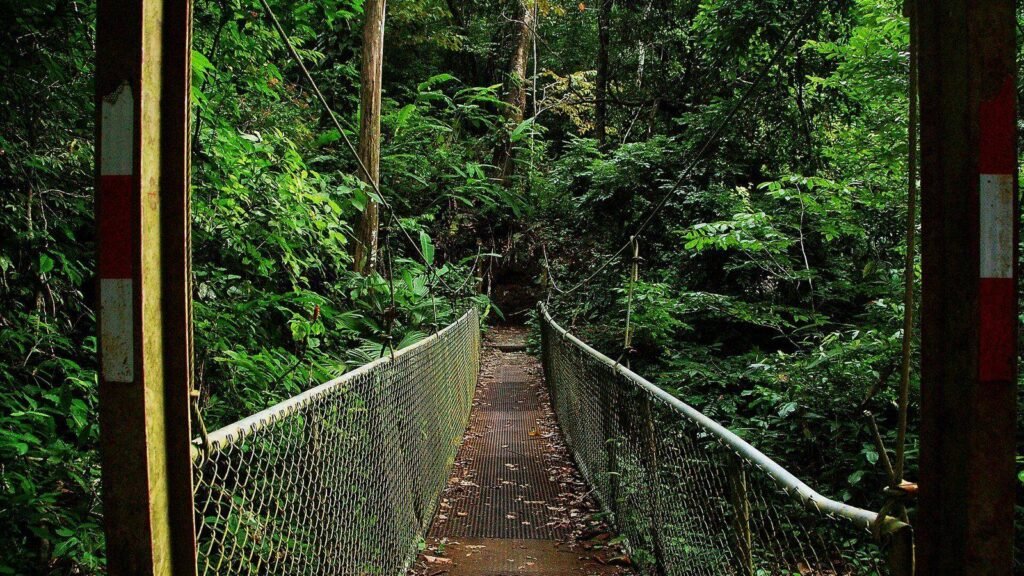
Featured image: rainforest bridge by Britt Reints via Wikimedia Commons, CC BY 2.0.