Editorial review: August 2, 2026. Entry information was checked against El Salvador’s immigration and foreign-affairs authorities; destination details were checked against the national tourism site.
El Salvador is small enough to cross in a day and varied enough that you should not. A thoughtful first route can move from San Salvador’s museums to a volcano above Santa Ana, through the coffee towns of Ruta de las Flores, and down to a Pacific surf beach without turning every day into a transfer.
This El Salvador travel guide is designed for independent travelers who want that variety but need the practical details: where to base yourself, how the CA-4 stay works, when a car is useful, and how to leave room for weather around volcanoes and the coast.
Prefer Arabic? Read our El Salvador travel guide in Arabic.
Where is El Salvador?
El Salvador sits on Central America’s Pacific side, between Guatemala and Honduras. It is the smallest country in mainland Central America, but its main travel regions are not one continuous urban area. Mountain roads, city traffic and beach access can make short map distances take longer than expected.
The capital, San Salvador, is the main air gateway. Santa Ana anchors the west near volcanoes, lakes and the Ruta de las Flores. La Libertad and the surf towns lie southwest of the capital, while the Gulf of Fonseca and eastern beaches require a longer dedicated leg.
Why travel to El Salvador now?
The strongest reason is not one landmark. It is the combination of landscapes within a compact itinerary: crater lakes, highland coffee country, black-sand beaches, archaeological sites and a capital whose cultural life is often skipped by travelers rushing to the coast.
Surfing is a major draw, but non-surfers have plenty to build around. You can hike with a local guide, eat pupusas in the town where they originated, spend a slow afternoon in Suchitoto, visit Joya de Ceren, or watch the light change over Lago de Coatepeque.
Entry requirements and the CA-4 rule
Visa requirements depend on your passport. El Salvador’s foreign ministry divides nationalities into visa-exempt, consular-visa and consulted-visa categories. Use the official visa requirement checker rather than relying on the rule that applied to a friend with a different passport.
El Salvador participates in the CA-4 border-control agreement with Guatemala, Honduras and Nicaragua. For eligible visitors, the authorized period is generally shared across the four countries; crossing from one CA-4 country to another does not automatically start a fresh stay. The immigration officer determines admission and the period recorded.
Prepare a passport valid for the required period, onward or return plans, accommodation information and evidence that you can fund the trip. Some visa-required travelers must complete a consular process or obtain a special entry authorization in advance. Check the current immigration answers shortly before departure because document and health requirements can change.
Best places to visit in El Salvador
San Salvador
Give the capital at least one complete day. In the historic center, the National Palace, Metropolitan Cathedral, National Theater and renovated public squares reveal a city in active transition. The Museo de Arte de El Salvador and the Museo Nacional de Antropologia offer useful context before you visit archaeological sites or rural towns.
San Salvador is spread out. Choose accommodation based on the areas you plan to visit, not simply the lowest price on the map. Ride-hailing is usually more practical than linking several neighborhoods by public bus on a short stay.
Santa Ana and its volcano
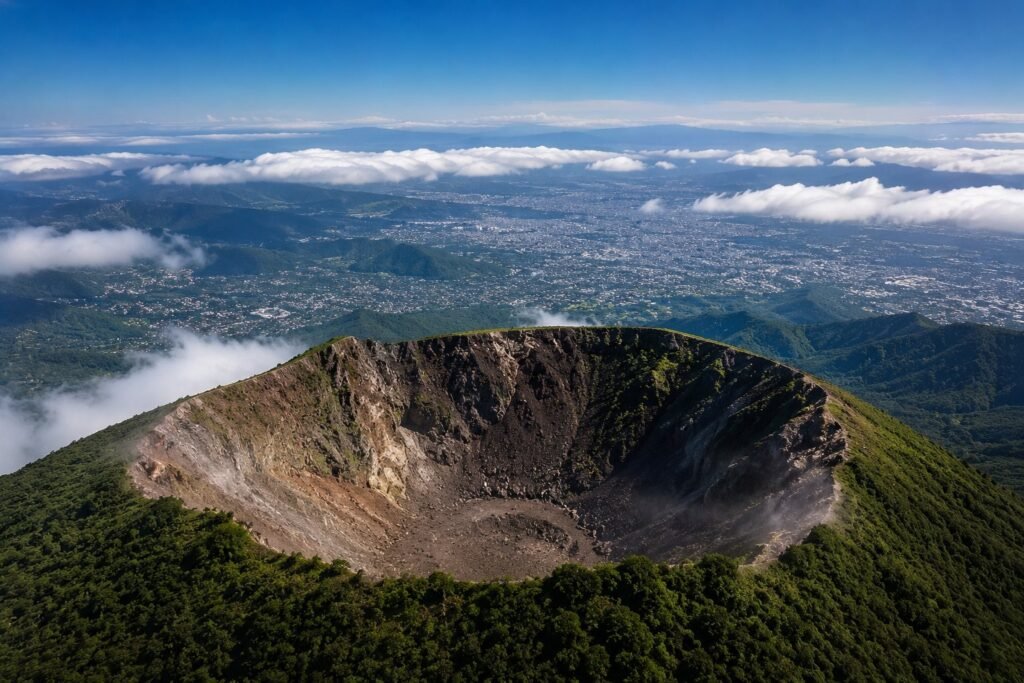
Santa Ana has a handsome theater and cathedral around its central square, but most travelers base here for the surrounding highlands. The Santa Ana volcano hike reaches a crater lake with wide views in clear weather. Access rules, start times and guide requirements can change, and volcanic or weather conditions can close the route. Confirm the official local procedure the day before and do not build a same-day international departure around the hike.
Lago de Coatepeque is close enough for a second day, particularly if you want a quiet lakeside afternoon rather than another strenuous outing.
Ruta de las Flores
The Ruta de las Flores links western highland towns including Nahuizalco, Salcoatitan, Juayua, Apaneca and Concepcion de Ataco. Each has a different rhythm, so the route is better with one or two nights than as a rapid sequence of roadside photos.
Juayua is known for its food scene, Ataco for murals and cafes, and Apaneca for cooler mountain landscapes and outdoor activities. Weekends bring more atmosphere and more traffic. On weekdays, verify which galleries, tours and restaurants will be open.
La Libertad, El Tunco and the surf coast
El Tunco is the best-known international traveler base, with surf schools, restaurants and nightlife in a walkable strip. It is convenient, not representative of every Salvadoran beach. Nearby El Zonte has a more dispersed feel, while other breaks suit different abilities.
Black volcanic sand becomes extremely hot in midday sun, currents can be strong, and a famous break is not automatically beginner-friendly. Choose a reputable instructor who selects the beach for current conditions and your actual level.
Suchitoto
North of the capital, Suchitoto offers cobbled streets, art spaces, a white church and views toward Lago Suchitlan. It is a good overnight stop for travelers who want mornings and evenings after day visitors leave. Boat trips and nearby nature excursions should be arranged through established local providers.
Eastern El Salvador
The east receives fewer first-time visitors, partly because of distance. El Cuco and Las Flores appeal to surfers and beach travelers who want several nights in one place. The Gulf of Fonseca offers islands and coastal scenery. Add the region only when you can give it a real block of time; it does not fit neatly between a morning volcano hike and an evening flight.
An 8-day El Salvador itinerary
- Day 1: Arrive in San Salvador and keep the evening local.
- Day 2: Explore the historic center and one major museum.
- Day 3: Travel to Santa Ana; visit the center and plan the next day’s conditions.
- Day 4: Hike Santa Ana volcano if open, or use Lago de Coatepeque as the weather alternative.
- Day 5: Move through Ruta de las Flores and sleep in Ataco or Juayua.
- Day 6: Continue to the La Libertad coast; take a sunset walk or surf lesson.
- Day 7: Keep a full coast day for surfing, seafood and rest.
- Day 8: Return to the airport with a generous traffic buffer.
With 10 days, add Suchitoto for two nights. With only five, choose either the western volcano-and-towns route or the coast rather than compressing both.
How to get around
Public buses are inexpensive and extensive, but they take time, can require transfers and are least convenient with luggage. They suit flexible travelers who speak some Spanish and can confirm the route locally. Keep valuables close and avoid displaying a phone at an open window or crowded terminal.
Tourist shuttles connect popular bases, while private transfers make sense for two or more travelers on a tight route. Ride-hailing is useful in the San Salvador area but should not be assumed in every town.
A rental car gives the most freedom for Ruta de las Flores and dispersed beaches. Drive in daylight when possible, expect speed humps and motorcycles, and download offline navigation. Ask the rental company in writing about insurance, unpaved roads and permission before taking a vehicle across a border.
Budget, money and food
The U.S. dollar is the simplest working currency for most visitors. Carry small notes for buses, markets, pupuserias and tips; cards are more reliable at hotels and larger restaurants. ATMs can charge both a local fee and your bank’s fee, so fewer planned withdrawals may be better than repeated small ones.
Pupusas are the essential starting point: thick corn or rice cakes filled with cheese, beans, pork or regional ingredients, served with curtido and tomato sauce. Also look for yuca frita or salcochada, riguas, sopa de gallina india, coastal seafood and seasonal fruit. A busy pupuseria with a visible griddle is often a better meal than a venue designed around a single viral view.
El Tunco and resort enclaves can cost noticeably more than inland towns. A mixed route, with local meals and a few paid experiences, gives a truer budget than multiplying one backpacker daily figure across the whole country.
When to go
The drier season generally runs from roughly November through April, making road trips and volcano plans easier. The wetter months bring greener landscapes, afternoon rain and possible disruption from heavier storms. Surf conditions vary by coast and experience level; ask a school about the break, tide and season rather than choosing by a generic “best month” list.
Higher towns can feel cool after sunset, while the coast remains hot and humid. Pack light clothing, a rain shell, sun protection, insect repellent, secure footwear and one light layer for the highlands.
Safety without outdated assumptions
El Salvador’s security situation has changed substantially in recent years, and old travel accounts may describe conditions that no longer match a particular place. That does not make every area or activity equally suitable. Government measures and local rules can also affect travelers.
Use current official travel advice, then ask your accommodation about the exact route you plan to take. Travel in daylight on unfamiliar rural roads, use established transport, avoid photographing security operations, and carry identification as required. On the coast, water conditions may be the more immediate risk: respect flags and local surf guidance.
Common first-trip mistakes
- Assuming the country is so small that transfer time does not matter.
- Counting a CA-4 border crossing as a new immigration period.
- Arriving at a volcano without checking access and weather.
- Choosing a surf beach for reputation rather than skill level.
- Seeing only El Tunco and missing the country’s highland and cultural side.
Frequently asked questions
How many days should I spend in El Salvador?
Seven to eight days is a strong first trip, combining the capital, western highlands and Pacific coast. Ten days allows Suchitoto or a slower beach stay.
Do I need a visa for El Salvador?
It depends on nationality and passport type. Check your category on the foreign ministry’s current visa page and confirm any advance authorization before booking non-refundable travel.
Is El Salvador only for surfers?
No. Volcanoes, archaeological sites, museums, coffee towns, lakes and food are enough to build a complete non-surf itinerary.
Can I combine El Salvador with Guatemala or Honduras?
Yes, but remember that the CA-4 admission period is generally shared. Check the specific land crossing, operating hours and entry requirements for both sides.
Official planning sources
- El Salvador Ministry of Foreign Affairs: visa checker
- El Salvador immigration: border-control questions
- El Salvador Travel: San Salvador
- El Salvador Travel: Ruta de las Flores
For the wider region, compare this route with our Panama travel guide.