Last reviewed: August 2, 2026. Visitor-planning information was checked against Mexico City’s official tourism resources. Museum hours, ticket releases and transport operations can change.
Five days in Mexico City is a beginning, not a complete tour. The capital is too large and layered for a checklist, so this itinerary gives each day one geographic centre: the historic core, Chapultepec, the southern neighbourhoods, Teotihuacan and a final day shaped around food or art.
The result covers major first-trip interests while avoiding the exhausting mistake of crossing the city several times a day.
Mexico City in five days: the short plan
| Day | Area | Main experience |
|---|---|---|
| 1 | Centro Historico | Zocalo, cathedral, Templo Mayor and Bellas Artes |
| 2 | Chapultepec and Reforma | Anthropology, castle or modern art |
| 3 | Coyoacan and the south | Neighbourhood history, markets and one reserved museum |
| 4 | Teotihuacan | Early archaeological day trip |
| 5 | Roma, Condesa or your specialist interest | Food, design, murals or a second museum |
Where to stay
Roma and Condesa are popular for restaurants, parks and visitor services, but accommodation quality and street noise vary. Reforma and Juarez provide central transport and business-district convenience. Centro Historico puts major sights close by day; choose the exact street carefully for evenings.
Mexico City’s scale means a slightly more expensive room near your daily interests can save hours. Check recent reviews for noise, water reliability, stairs and late-night access, not only the neighbourhood label.
Day 1: read the layers of the historic centre
Start around the Zocalo and Templo Mayor before the central streets become busiest. The cathedral, surviving archaeological remains and government buildings occupy the same civic space, making this the clearest introduction to the city’s overlapping histories.
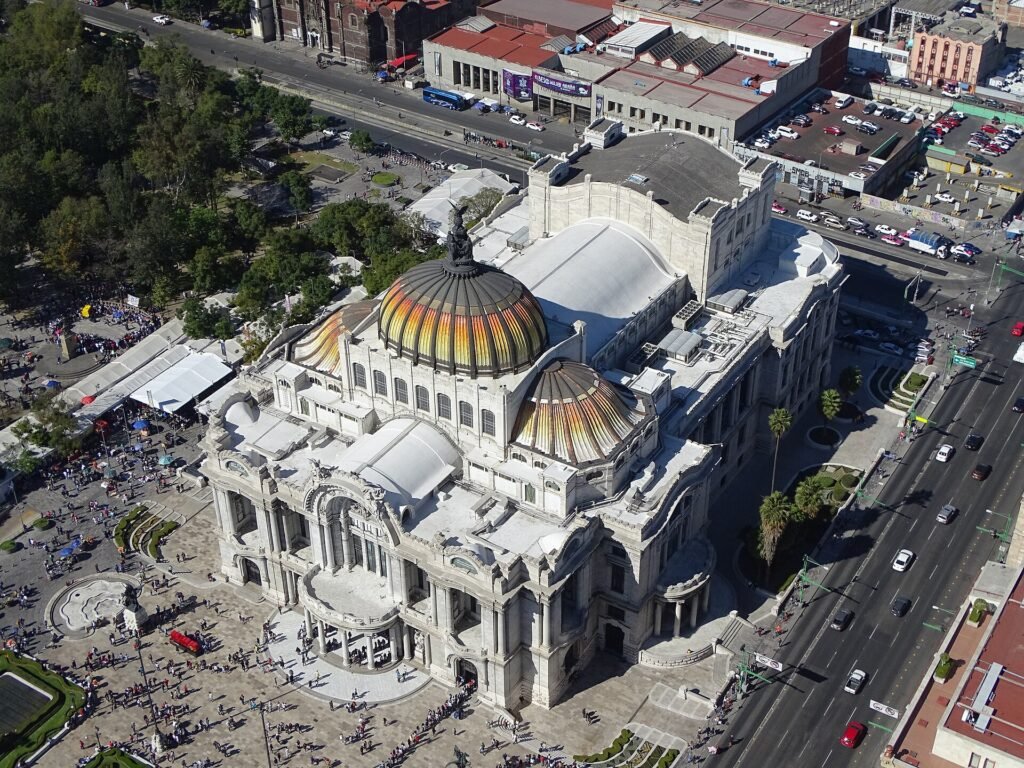
Continue west towards Palacio de Bellas Artes, stopping at one or two interiors rather than every famous facade. If you want a rooftop or tower view, verify opening and queue conditions on the day. Finish with Alameda Central and an early evening meal nearby or return to your base before commuter traffic peaks.
Day 2: Chapultepec without museum overload
The National Museum of Anthropology can absorb half a day. Decide which galleries matter most and take breaks; rushing every room reduces a world-class collection to labels. Pair it with Chapultepec Park and either the castle or a second museum, not both automatically.
Walk part of Paseo de la Reforma later in the day. Distances inside the park and along the avenue are longer than they appear, so comfortable shoes matter more than an ambitious reservation schedule.
Day 3: Coyoacan and the southern city
Coyoacan’s plazas, market and older streets make a good change of pace. The Frida Kahlo Museum requires advance planning and should be treated as a timed anchor, not a ticket you will casually find after lunch. Buy only through the official channel and check identity or entry requirements.
Combine Coyoacan with one nearby priority: the Anahuacalli Museum, the National Autonomous University campus and murals, or a carefully selected Xochimilco experience. Trying to do all three produces more vehicle time than culture.
If choosing Xochimilco, confirm the official boarding area and current pricing structure. The waterways have ecological and community importance beyond party boats.
Day 4: visit Teotihuacan early
Leave early for Teotihuacan to reduce heat and crowd pressure. The archaeological zone is exposed, large and physically demanding even without climbing monuments. Carry water, sun protection and a hat, and check current access rules before departure.
A guide adds context about urban planning, religion and the societies that occupied the site. If travelling independently, verify the bus terminal, return schedule and official entrance rather than accepting unsolicited transport offers.
Keep the evening flexible. A full archaeological day followed by a distant dinner reservation is one of the easiest ways to make a good itinerary unpleasant.
Day 5: choose a theme
Food and neighbourhoods
Walk Roma Norte and Condesa with a market, bakery or food tour that explains ingredients and regional traditions. Trendy restaurants are only one part of the capital’s food culture.
Murals and modern art
Use the day for works by Mexico’s major muralists and one modern-art collection. Check where specific murals are currently accessible; public buildings can have security or event restrictions.
Markets and everyday design
Choose a market appropriate to your interests and visit respectfully. Food markets, craft markets and wholesale complexes are different experiences. A local guide is useful where navigation or photography etiquette is unclear.
Getting around
The Metro and Metrobus cover many visitor corridors, while authorised taxis and ride services help with late returns or awkward connections. Public transport is crowded at peak times. Keep bags closed, avoid displaying valuables and confirm service changes locally.
- Group each day geographically before choosing transport.
- Allow more time than the map estimate during rain or rush hour.
- Use official airport transport information for arrivals.
- Do not board an unverified street vehicle because traffic is frustrating.
Altitude, air and weather
Mexico City sits at high elevation. Some visitors notice fatigue, headache or shortness of breath during the first day. Hydrate, moderate alcohol and avoid scheduling the hardest walking route immediately after an overnight flight.
Rain often arrives seasonally in the afternoon, while air quality and strong sun can affect outdoor plans. Check the local forecast and environmental guidance each morning, then move indoor and outdoor activities if necessary.
How to eat well without booking every hour
Reserve the one or two restaurants that define the trip, then leave space for markets, fondas, bakeries and spontaneous recommendations. Choose busy, well-handled food stalls and use ordinary judgement about water and refrigeration. A reputable food tour can teach ordering, ingredients and market etiquette early in the stay.
Common planning mistakes
- Scheduling Coyoacan, Chapultepec and Centro on the same day.
- Assuming popular museum tickets will be available at the door.
- Ignoring altitude on the first day.
- Visiting Teotihuacan without sun protection or an early start.
- Judging the city’s food only through high-end reservations.
Frequently asked questions
Are five days enough for Mexico City?
Five days is enough for a strong first visit with one day trip. Seven days allows more neighbourhood depth and less pressure around museum closures.
Do I need a car?
No. Traffic and parking make public transport, walking and verified rides more practical for most visitors. A car becomes useful only for a wider regional route.
Should I book Teotihuacan as a tour?
A tour is useful for historical context and simple transport. Independent travel works for confident visitors who verify the current bus and entry details.
Continue planning Mexico
Use our Mexico travel guide to choose what comes after the capital. If the wider journey continues south, compare the Guatemala first-trip guide.
Official planning links
- Mexico City official visitor guide
- Official Mexico City itinerary planner
- Mexico City Ministry of Tourism
- Official English tourist guide PDF
Featured image: Palacio de Bellas Artes from Torre Latinoamericana by Adam Jones via Wikimedia Commons, CC BY-SA 2.0.