Last reviewed: August 2, 2026. Destination context was checked against Guatemala’s tourism authority and official protected-area material. Boat operations, lake conditions and local access can change daily.
Lake Atitlan is not one lakeside town. Panajachel is the transport hub, San Juan is known for community-led art and textile initiatives, San Pedro has a larger backpacker scene, Santa Cruz sits steeply above the water, and Santiago Atitlan carries a distinct Tz’utujil identity.
A four-day plan works best when you choose one base and visit only one or two other communities each day. Constant boat hopping turns the lake into a terminal rather than a place.
Which Lake Atitlan village should you stay in?
| Base | Best for | Consider before booking |
|---|---|---|
| Panajachel | Easy arrival, broad services and first or last night | Busier and less secluded |
| Santa Cruz La Laguna | Lake views, quiet stays and waterfront access | Many properties involve steep paths or boat dependence |
| San Marcos La Laguna | Wellness-focused stays and a compact centre | Visitor culture can feel detached from local life |
| San Juan La Laguna | Art, textiles, cooperatives and walkability | Quieter evenings than San Pedro |
| San Pedro La Laguna | Budget range, restaurants and nightlife | Noise and atmosphere vary sharply by area |
| Santiago Atitlan | Tz’utujil culture, history and a larger local town | Farther by boat from the north-shore visitor hubs |
A realistic four-day Lake Atitlan itinerary
Day 1: arrive in daylight
Reach the lake early enough to find your hotel without rushing. If arriving through Panajachel and staying elsewhere, confirm the public-boat landing, final practical departure and exact hotel access. Some properties advertised under a village name are reached only by a private dock or steep path.
Use the afternoon to learn your base on foot. Identify the correct dock for the next morning and ask the hotel how wind or weather may affect boats.
Day 2: San Juan and San Pedro
Visit San Juan early and choose a locally led experience around textiles, painting, coffee or medicinal plants. Ask how the cooperative is organised and whether purchases go directly to the makers. Avoid treating demonstrations as free entertainment when you have no intention of listening or supporting the work.
Continue to San Pedro only if the pace feels comfortable. Walk beyond the busiest visitor lane, have lunch and return before the lake becomes rough. If staying in San Juan or San Pedro, reverse the day and give your base the greater share of time.
Day 3: Santiago Atitlan with a local guide
Santiago is one of the lake’s most culturally significant communities. A Tz’utujil guide can explain religious traditions, the local market, weaving, recent history and appropriate behaviour around sacred or private spaces.
Ask before photographing people, ceremonies or devotional figures. Clothing, language and ritual are not attractions detached from residents. Buy textiles with curiosity about materials and labour rather than bargaining as a performance.
Day 4: one landscape experience, then depart
Choose a lower-risk guided walk, kayak in suitable morning conditions or simply spend time along the shore. Hiking routes around the lake vary in security, exposure and difficulty. Seek current local advice and use a reputable guide for isolated trails or sunrise excursions.
Leave a substantial buffer before any onward shuttle or flight. Boat delays, road traffic and mountain weather can turn a tight connection into an expensive problem.
How public boats work
Public launches connect major communities, usually from shared docks and with multiple stops. Ask the captain or dock staff to confirm the destination before boarding, keep small luggage manageable and expect boarding conditions to be less formal than a city ferry terminal.
Wind often increases later in the day, making rides rougher or less predictable. Plan longer crossings in the morning when possible. Life-jacket availability and boat loading are valid reasons to wait for another service.
Getting to Lake Atitlan
Most first-time visitors arrive by shuttle or private transfer from Antigua or Guatemala City. Public transport can be economical but may require several changes and careful luggage awareness. Roads descend through mountain terrain, and travel times depend on traffic, weather and road works.
Do not schedule an international departure immediately after a cross-lake boat and road transfer. Spend the final night in Antigua or Guatemala City when the flight timing leaves little margin.
Culture and respectful travel
Several Maya languages and identities exist around the lake. Learn which community you are visiting instead of using “Mayan village” as a universal label. Spanish is widely useful, but local greetings and the presence of an interpreter can change the quality of an exchange.
- Ask permission before close photographs.
- Pay agreed guiding and workshop fees fairly.
- Dress respectfully for churches and ceremonies.
- Do not enter private agricultural land for a viewpoint.
- Choose community businesses because of their work, not as a charity performance.
Swimming, water and health
Water quality is not identical around the entire lake and can change. Ask reliable local sources whether swimming is advisable at the exact place and date. Do not drink lake or tap water unless it has been properly treated, and follow accommodation guidance for refill stations.
The elevation, strong sun and steep streets can dehydrate visitors quietly. Carry water, use sun protection and make the first active day easier if arriving from sea level.
Safety and hiking
Conditions on paths and roads can change. Ask the hotel, tourism authority or an established local guide about the intended route on the same day. Avoid isolated hikes alone, display as little valuable equipment as possible and arrange a clear return.
Volcano hikes require appropriate fitness, weather and specialist guidance. A sunrise photograph is not worth ignoring official or local advice.
How many nights do you need?
Three nights is a sensible minimum. Four nights is better when staying away from Panajachel or when culture and hiking both matter. One night rarely justifies the mountain road and boat logistics.
Common planning mistakes
- Choosing a hotel without checking dock and stair access.
- Planning long boat crossings late in the afternoon.
- Trying to visit five villages in one day.
- Photographing residents or ceremonies without asking.
- Hiking an isolated route based on an old travel post.
Frequently asked questions
Is Panajachel the best place to stay?
It is the easiest logistical base, especially for a short stay or early road departure. Travellers seeking quiet lake views may prefer another village.
Can I travel around Lake Atitlan without a tour?
Yes, public boats make independent visits possible. A local guide adds important context in Santiago, San Juan and on hiking routes.
Is four days too long?
No. Four days supports two community visits, one landscape activity and enough flexibility for lake weather.
Continue planning Guatemala
Fit the lake between Antigua and Tikal with our Guatemala travel guide. Compare an onward route through the Belize first-trip guide or El Salvador guide.
Official planning links
- Guatemala Tourism Institute
- Official guide to Guatemala’s protected areas
- INGUAT destination media and planning portal
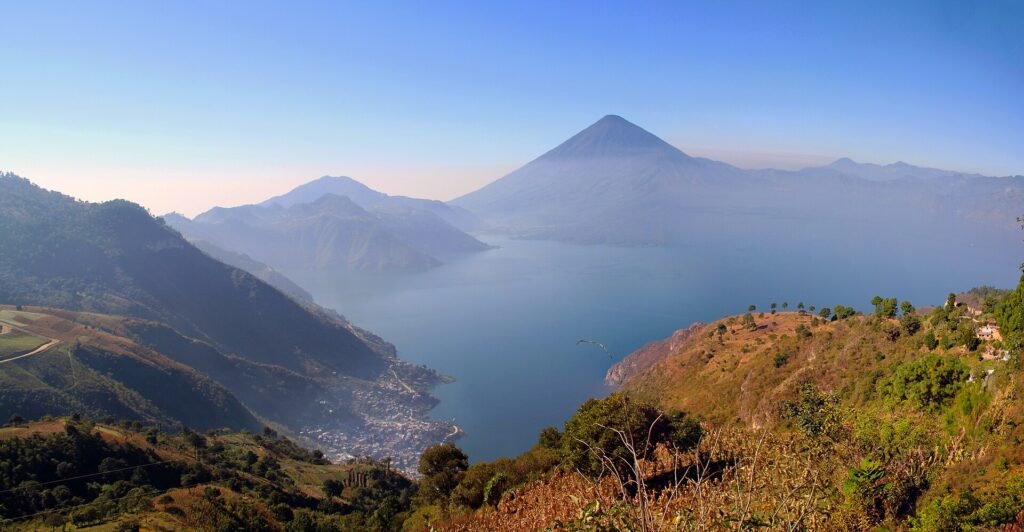
Featured image: Lake Atitlan panorama by Chensiyuan via Wikimedia Commons, CC BY-SA 4.0.